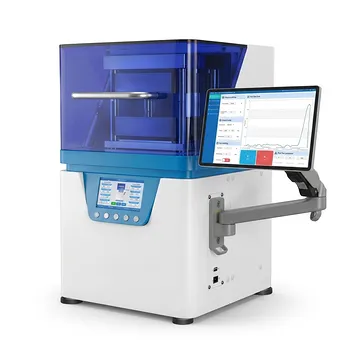
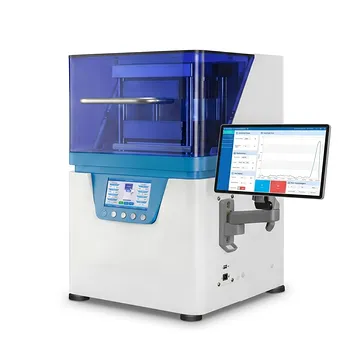
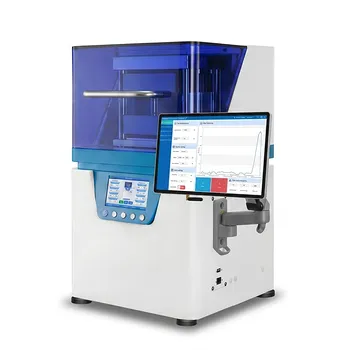
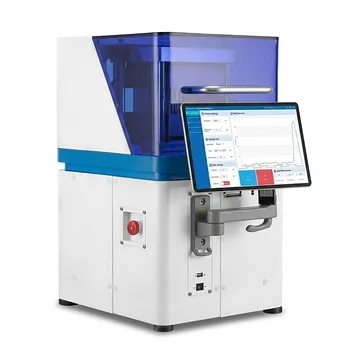
Die hydraulische Laborpresse ist das entscheidende Instrument, um rohe Polymerverbundwerkstoffe in standardisierte, hochintegrierte Testproben zu verwandeln. Durch die gleichzeitige Anwendung von hoher Hitze und präzisem uniaxialem Druck wandelt die Presse Verbundgranulate oder -schichten in dichte, gleichmäßige Platten um. Dieser Prozess ist grundlegend, um interne Defekte zu eliminieren und sicherzustellen, dass nachfolgende mechanische, thermische und elektrische Tests die wahren Eigenschaften des Materials widerspiegeln und nicht etwaige Herstellungsfehler.
Eine hydraulische Laborpresse bietet die kontrollierte thermische und mechanische Umgebung, die zur Herstellung fehlerfreier Polymerproben erforderlich ist. Ihre Hauptaufgabe besteht darin, strukturelle Homogenität und Dimensionsstabilität zu gewährleisten, die Voraussetzungen für jede zuverlässige Materialcharakterisierung sind.
Sicherstellung von struktureller Integrität und Homogenität
Die Beseitigung von internen Hohlräumen und Porosität
Die Anwendung von hohem Druck, der oft bis zu 300 kN erreicht, ist entscheidend, um Luft und flüchtige Bestandteile aus der Polymermatrix zu pressen. Durch die Beseitigung interner Hohlräume und Luftblasen stellt die Presse sicher, dass die Probe ihre theoretische Maximaldichte erreicht. Diese Beseitigung von Porosität ist für Forscher, die Viskoplastizität untersuchen, von entscheidender Bedeutung, da sie verhindert, dass porenbedingte Schwächen die Daten zur mechanischen Reaktion verfälschen.
Erreichen gleichmäßiger Dichtegradienten
Eine hydraulische Präzisionspresse sorgt dafür, dass der Druck gleichmäßig über die gesamte Oberfläche der Form verteilt wird. Diese Gleichmäßigkeit verhindert Dichtegradienten, bei denen einige Teile einer Probe stärker komprimiert sind als andere. Konsistente interne Strukturen sind notwendig, um sicherzustellen, dass Testergebnisse, wie z. B. Zug- oder Biegefestigkeit, über verschiedene Proben hinweg wiederholbar und genau sind.
Standardisierung der Dimensionsstabilität
Standardisierte Testplatten erfordern exakte geometrische Abmessungen, um internationalen Prüfprotokollen zu entsprechen. Die hydraulische Presse verwendet Edelstahlformen und konstanten Druck, um sicherzustellen, dass jede Probe eine gleichmäßige Dicke und eine glatte Oberflächenbeschaffenheit aufweist. Diese dimensionale Präzision ist entscheidend für Anwendungen, die eine hohe optische Transparenz oder spezifische mechanische Toleranzen erfordern.
Erleichterung der Materialumwandlung und -integration
Förderung von viskosem Fluss und Füllstoffinfiltration
Während des Heißpressvorgangs bringen Temperaturen – oft über 220 °C – die Polymermatrix in einen viskosen Fließzustand. Dies ermöglicht es dem Polymer, primäre und sekundäre Füllstoffe, wie anorganische Pulver oder Fasern, vollständig zu umhüllen und zu infiltrieren. Eine ordnungsgemäße Infiltration ist notwendig, um die Ionenleitfähigkeit und mechanische Flexibilität fortschrittlicher Materialien wie Verbundelektrolyte zu verbessern.
Management der molekularen Vernetzung
Bei duroplastischen Polymeren wie EVA oder PVB liefert die Presse die Wärme und den Druck, die erforderlich sind, um die molekulare Vernetzung auszulösen. Diese chemische Umwandlung verleiht dem Polymer seine endgültige Festigkeit und thermische Stabilität. Die präzise Kontrolle über die Pressenumgebung stellt sicher, dass die Vernetzung über die gesamte Dicke der Zwischenschicht gleichmäßig ist.
Eliminierung interner Eigenspannungen
Beim Formgebungsprozess geht es nicht nur um Erhitzen und Pressen; er beinhaltet auch eine kontrollierte Abkühlphase. Durch die genaue Steuerung der Vorheiz-, Druckhalte- und Abkühlzyklen minimiert die hydraulische Presse die internen Spannungen, die natürlicherweise bei der Polymerverfestigung auftreten. Dies verhindert, dass sich die Proben verziehen oder reißen, und stellt sicher, dass sie die wahren thermischen Verformungseigenschaften des Materials genau widerspiegeln.
Verständnis der Kompromisse und Grenzen
Thermische Gradienten und Randeffekte
Während eine beheizte Presse eine kontrollierte Umgebung bietet, können größere Formen unter thermischen Gradienten leiden, bei denen die Mitte heißer ist als die Ränder. Dies kann zu ungleichmäßiger Aushärtung oder unterschiedlichen Kristallinitätsgraden innerhalb einer einzigen Testplatte führen. Anwender müssen sicherstellen, dass ihre Presse über hochwertige Heizelemente und eine ausreichende Isolierung verfügt, um eine wirklich isotherme Umgebung aufrechtzuerhalten.
Drucküberschreitung und Materialgrat
Die Anwendung von übermäßigem Druck oder das Versäumnis, die Anstiegsgeschwindigkeit zu kontrollieren, kann zu "Gratbildung" führen, bei der das geschmolzene Polymer aus dem Formhohlraum herausgedrückt wird. Dies verschwendet nicht nur Material, sondern kann auch zu einer Verdünnung der Probe unter die erforderlichen Spezifikationen führen. Eine präzise, automatisierte Drucksteuerung ist erforderlich, um das Bedürfnis nach Dichte mit der Erhaltung der Geometrie der Form in Einklang zu bringen.
Empfindlichkeit der Abkühlrate
Die Geschwindigkeit, mit der eine Probe unter Druck abgekühlt wird, beeinflusst maßgeblich die Morphologie teilkristalliner Polymere. Eine schnelle Abkühlung könnte einen ungeordneten Zustand "einfrieren", während eine langsame Abkühlung eine höhere Kristallinität ermöglicht. Forschungsexperten müssen ihre Abkühlprotokolle standardisieren, um sicherzustellen, dass die physischen Proben repräsentativ für den beabsichtigten Herstellungsprozess sind.
So optimieren Sie den Pressvorgang für Ihr Ziel
Die richtige Wahl für Ihr Ziel treffen
Um die besten Ergebnisse mit einer hydraulischen Laborpresse zu erzielen, müssen Sie die Fähigkeiten der Maschine mit Ihren spezifischen Materialanforderungen in Einklang bringen.
- Wenn Ihr Hauptaugenmerk auf der mechanischen Charakterisierung liegt: Priorisieren Sie die Aufrechterhaltung des hohen Drucks und präzise Abkühlzyklen, um interne Spannungen und Hohlräume zu eliminieren, die zu vorzeitigem Versagen führen könnten.
- Wenn Ihr Hauptaugenmerk auf der Füllstoffintegration liegt (z. B. Elektrolyte): Konzentrieren Sie sich auf die Heizpräzision und das Fenster des "viskosen Flusses", um sicherzustellen, dass die Polymermatrix die anorganischen Additive vollständig umhüllt.
- Wenn Ihr Hauptaugenmerk auf optischer oder zwischenschichtiger Konsistenz liegt: Stellen Sie sicher, dass die Presse eine hohe Dickengleichmäßigkeit und eine fein abgestimmte Drucksteuerung bietet, um alle Spuren von internen Luftblasen zu entfernen.
Die hydraulische Laborpresse bleibt das maßgebliche Werkzeug, um die Lücke zwischen rohen Verbundwerkstoffen und hochwertigen, datenbereiten Testproben zu schließen.
Zusammenfassungstabelle:
| Hauptfunktion | Kernvorteil für die Probe | Zielparameter |
|---|---|---|
| Hohlraumbeseitigung | Entfernt interne Luft/flüchtige Stoffe für max. Dichte | Hoher uniaxialer Druck (bis zu 300 kN) |
| Homogenität | Verhindert Dichtegradienten für wiederholbare Ergebnisse | Gleichmäßige Druckverteilung |
| Materialintegration | Fördert viskosen Fluss zur Füllstoffumhüllung | Präzise Temperatursteuerung (> 220 °C) |
| Spannungsmanagement | Verhindert Verzug und Risse durch kontrollierte Zyklen | Optimierte Abkühlphase |
| Dimensionsstabilität | Sorgt für gleichmäßige Dicke und glatte Oberflächen | Hochwertige Edelstahlformen |
Verbessern Sie Ihre Materialforschung mit KINTEK Solutions
Um die Lücke zwischen rohen Verbundwerkstoffen und zuverlässigen Daten zu schließen, benötigt Ihr Labor eine Presse, die kompromisslose Präzision bietet. KINTEK ist auf umfassende Laborpresslösungen spezialisiert, die für die anspruchsvollsten Forschungsumgebungen entwickelt wurden. Egal, ob Sie grundlegende Batterieforschung betreiben, fortschrittliche Elektrolyte entwickeln oder mechanische Toleranzen testen, wir haben das richtige Werkzeug für Ihre Anwendung:
- Manuelle & automatische Modelle: Für unterschiedliche Produktionsmaßstäbe und wiederholbare Zyklen.
- Beheizte & multifunktionale Pressen: Perfekt für das Management von viskosem Fluss und Vernetzung.
- Glovebox-kompatible Lösungen: Ideal für die Handhabung empfindlicher Materialien in inerten Umgebungen.
- Kalt- & Warmisostatische Pressen: Gewährleistung multidirektionaler Dichte für komplexe Bauteile.
Sind Sie bereit, eine überlegene strukturelle Homogenität und fehlerfreie Proben zu erreichen? Kontaktieren Sie noch heute unser technisches Team, um Ihre spezifischen Pressanforderungen zu besprechen und Ihre ideale Laborlösung zu finden!
Referenzen
- Mihai Georgescu, Dana Gurău. Thermally resistant polymer composites reinforced with fibreglass. DOI: 10.24264/lfj.17.4.7
Dieser Artikel basiert auch auf technischen Informationen von Kintek Solution Wissensdatenbank .
Ähnliche Produkte
- Labor-Hydraulikpresse Labor-Pelletpresse Knopf-Batterie-Presse
- Hydraulische Laborpresse 2T Labor-Pelletpresse für KBR FTIR
- Hydraulische Laborpresse Laborgranulatpresse für Handschuhfach
- 24T 30T 60T Beheizte hydraulische Laborpresse mit Heizplatten für das Labor
- Automatische hydraulische Laborpresse - Labor-Tablettenpresse
Andere fragen auch
- Wie wird eine Labor-Hydraulikpresse für HAP-Verbundgele verwendet? Standardisierung von Mineralsubstraten
- Welche Rolle spielt eine Laborhydraulikpresse bei Reaktionspellets? Optimierung der Dichte von Mondboden und Metallbrennstoff
- Welche Rolle spielt eine Labor-Hydraulikpresse bei der Herstellung von piezoelektrischen Keramikscheiben für DC-PG? | KINTEK
- Warum wird eine Labor-Hydraulikpresse für die Probenvorbereitung von PBAT- und PLA-Proben benötigt? Erzielen Sie makellose Charakterisierung
- Welche Rolle spielt eine Labor-Hydraulikpresse bei der Montage von Festkörperbatterie-Testzellen? Expertenratgeber